





Dec 02, 2024
The Reality of AI and Biorisk
This paper provides an analysis of existing available research surrounding two AI and biorisk threat models: 1) access to information and planning via large language models (LLMs), and 2) the use of AI-enabled biological tools (BTs) in synthesizing novel biological artifacts.

Authors
Aidan Peppin, Anka Reuel, Stephen Casper, Elliot Jones, Andrew Strait, Usman Anwar, Anurag Agrawal, Sayash Kapoor, Sanmi Koyejo, Marie Pellat, Rishi Bommasani, Nick Frosst, Sara Hooker
Abstract
To accurately and confidently answer the question 'could an AI model or system increase biorisk', it is necessary to have both a sound theoretical threat model for how AI models or systems could increase biorisk and a robust method for testing that threat model. This paper provides an analysis of existing available research surrounding two AI and biorisk threat models: 1) access to information and planning via large language models (LLMs), and 2) the use of AI-enabled biological tools (BTs) in synthesizing novel biological artifacts. We find that existing studies around AI-related biorisk are nascent, often speculative in nature, or limited in terms of their methodological maturity and transparency. The available literature suggests that current LLMs and BTs do not pose an immediate risk, and more work is needed to develop rigorous approaches to understanding how future models could increase biorisks. We end with recommendations about how empirical work can be expanded to more precisely target biorisk and ensure rigor and validity of findings.
Related works

Research
Fairness of Deep Ensembles: On the interplay between per-group task difficulty and under-representation
Read
Research
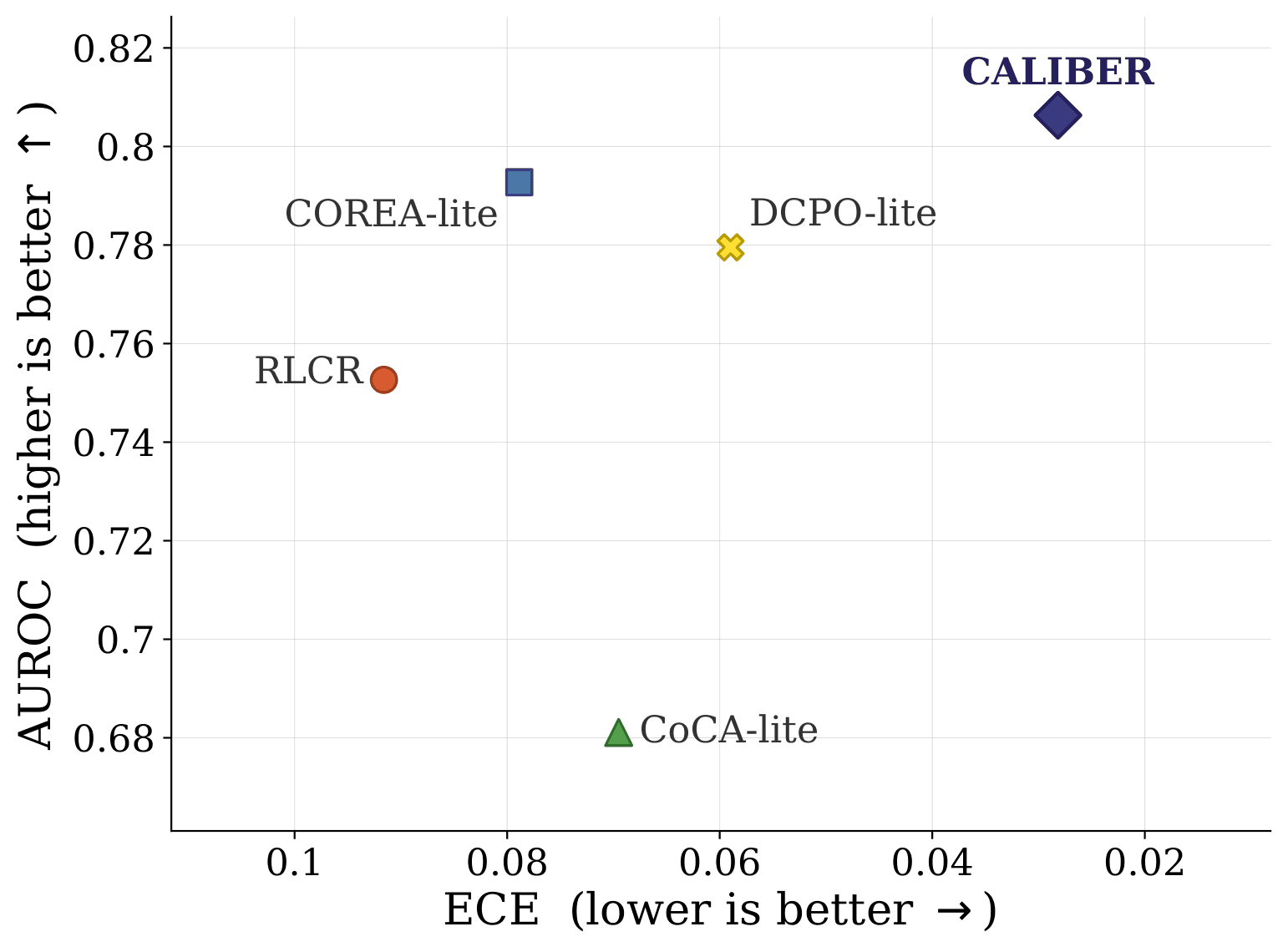
CALIBER: Calibrating confidence before and after reasoning in language models
Read

Research
The State of Multilingual LLM Safety Research: From Measuring the Language Gap to Mitigating It
Read